Sample report · tank T-102
This is what you get for each tank.
Every page of a real report for the example tank, a 10 m³ stainless steel dairy tank: cost and man-hours, the basis and exclusions, the drawings and the engineering calculation. Your own report has your datasheet, your rates and its own report number.
Four files with every report
- Report (PDF), shown below: cost, man-hours, duration, basis, exclusions, all drawings and the calculation
- Drawings (PDF): the general arrangement and the shop drawings again as their own A4 set
- Excel: the same take-off, hours and price with live formulas, so you can change a rate or a quantity
- Word: the report text as an editable document
The pages here are marked SAMPLE and are pictures only. This sample is not a valid report and its codes do not check at /verify. See the price.
What is in the report, section by section
The example is tank T-102: a 10 m³ vertical, shop-built tank in 316L stainless steel for a dairy plant, standing on legs, with a dished top and a cone bottom. Every figure in the report comes from one datasheet, so a changed input gives a new report with a new number.
Estimate summary (pages 1 to 3)
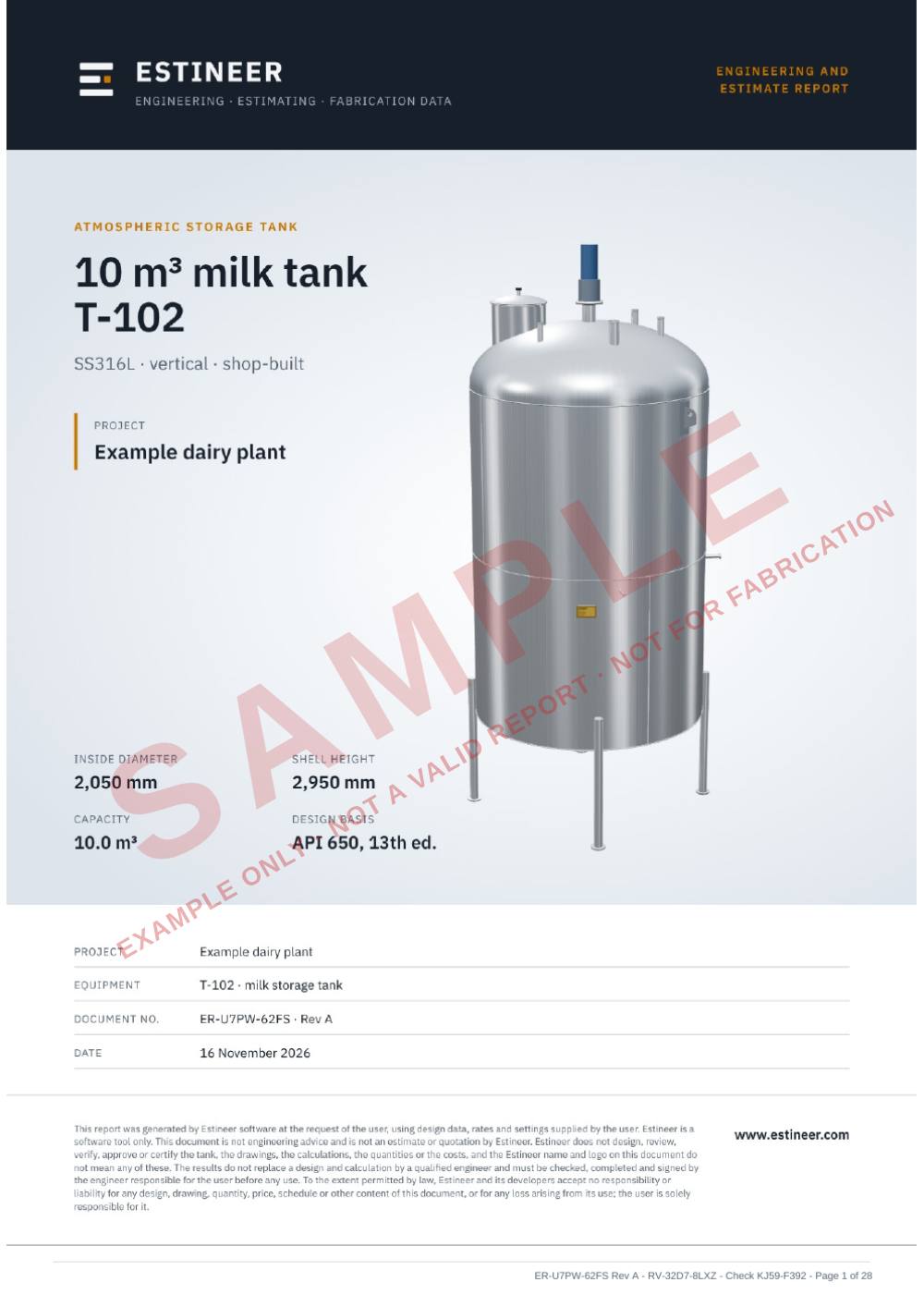
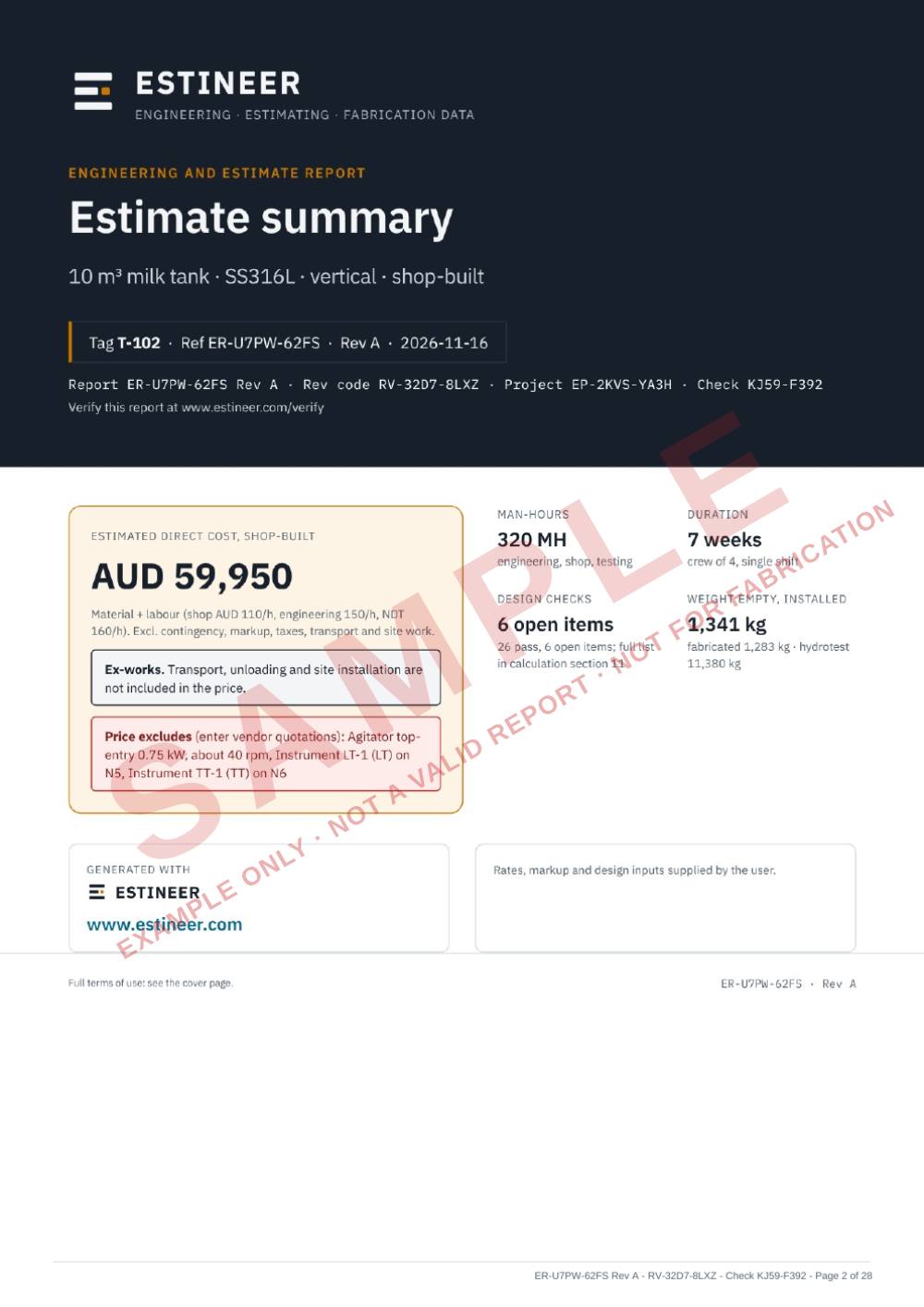
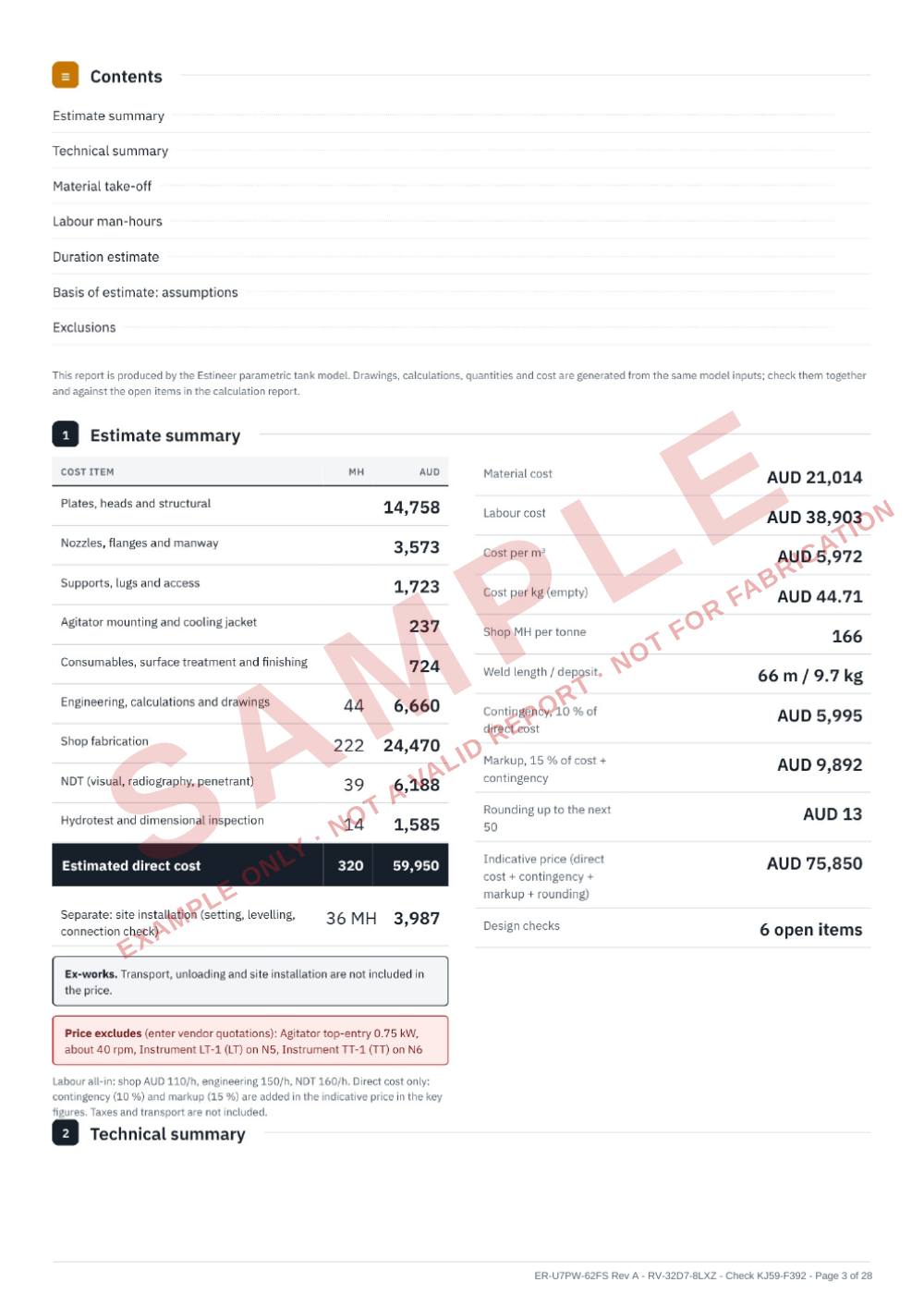
The cover names the tank, the client and the revision. Page 2 gives the indicative price, the total man-hours, the shop duration in weeks and the main exclusions on one page, so a manager can read the result in a minute. Page 3 lists the contents and splits the price into material, labour, engineering, testing and finishing, followed by the contingency and the markup, each shown separately.
Material take-off (pages 4 and 5)
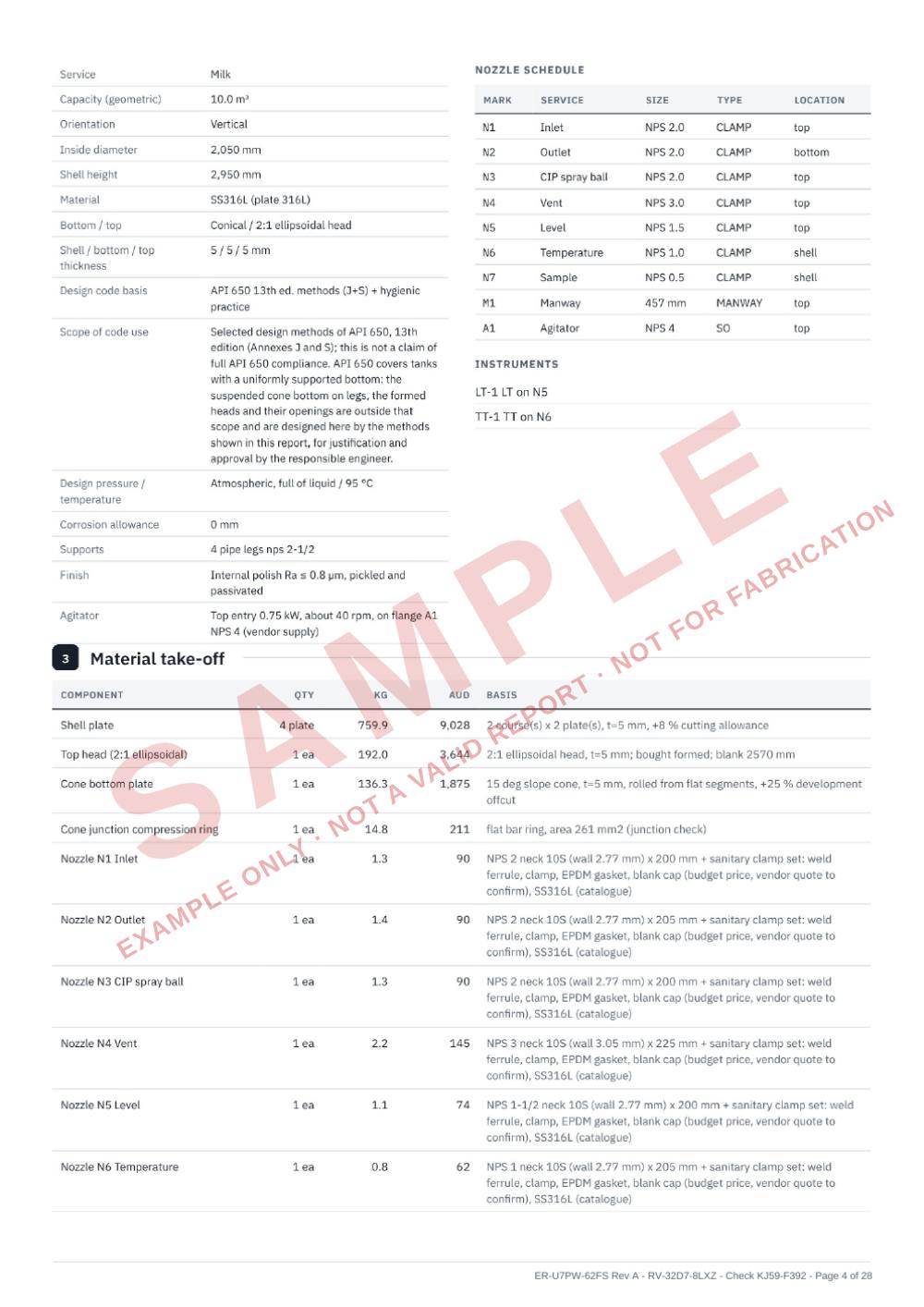
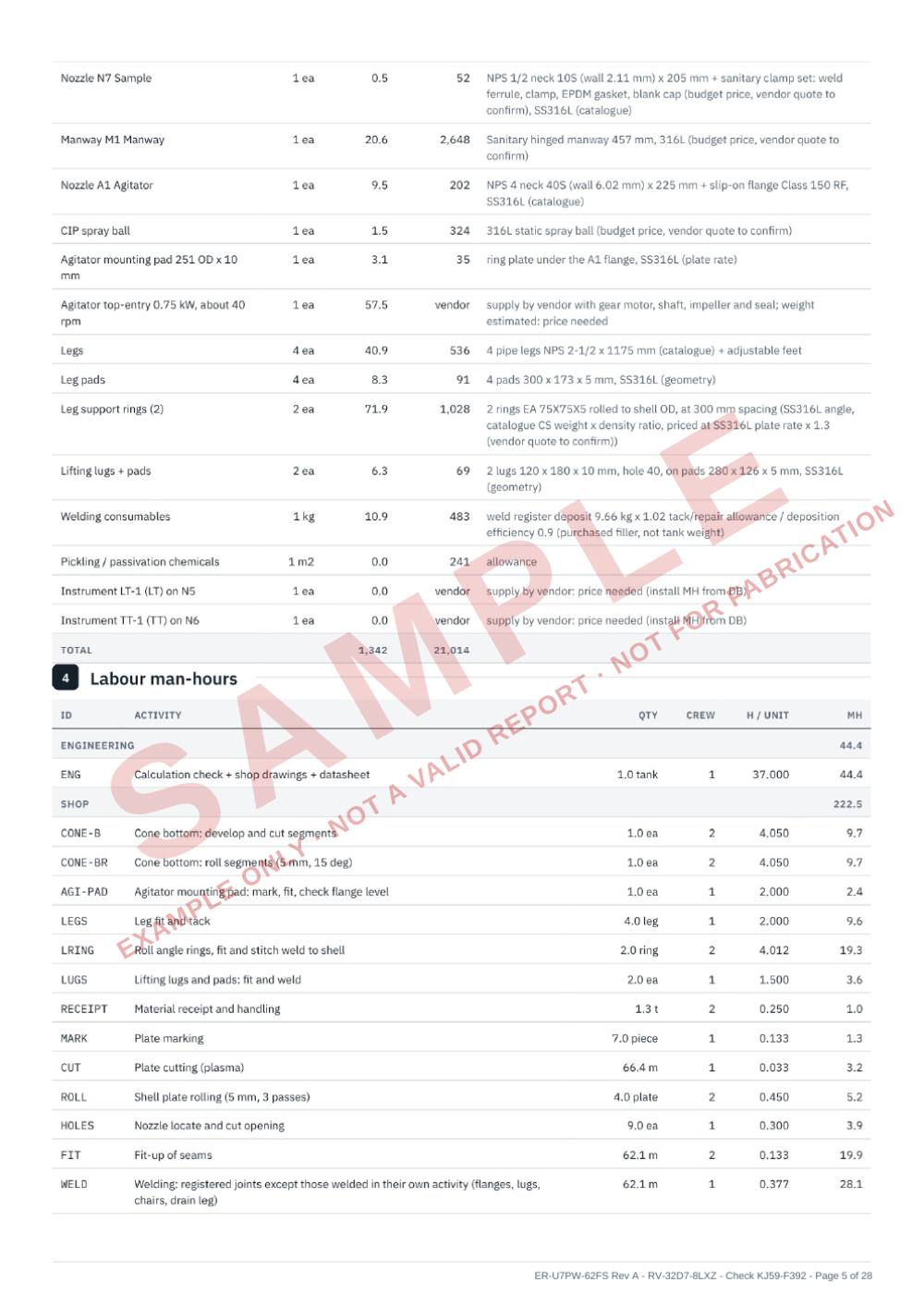
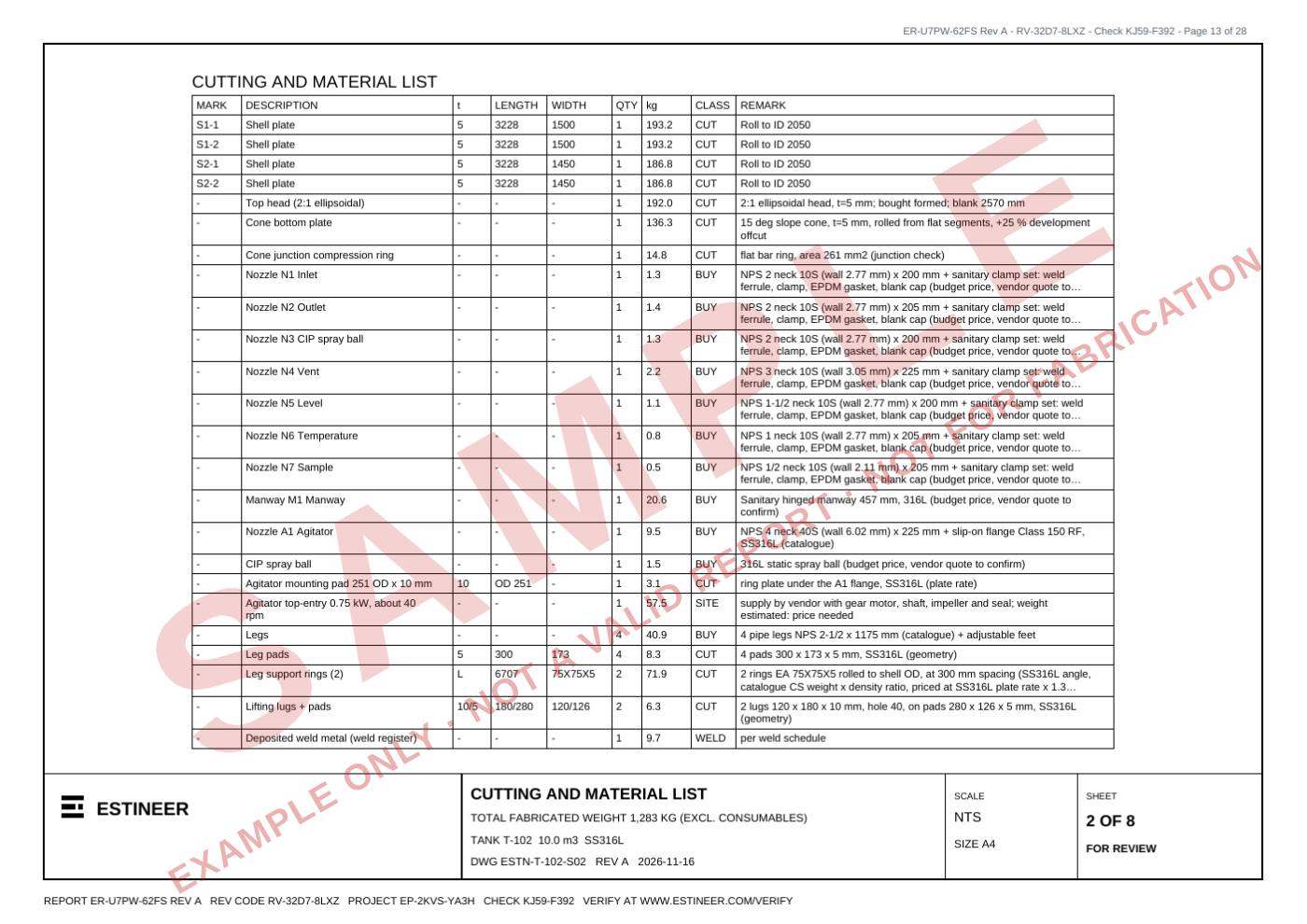
Every plate, head, nozzle, flange, leg and lug with its grade, size, quantity and weight, then the material cost line by line. Clients can compare quotes like for like because the quantities are stated, not hidden in a lump sum.
Man-hours and duration (pages 5 and 6)
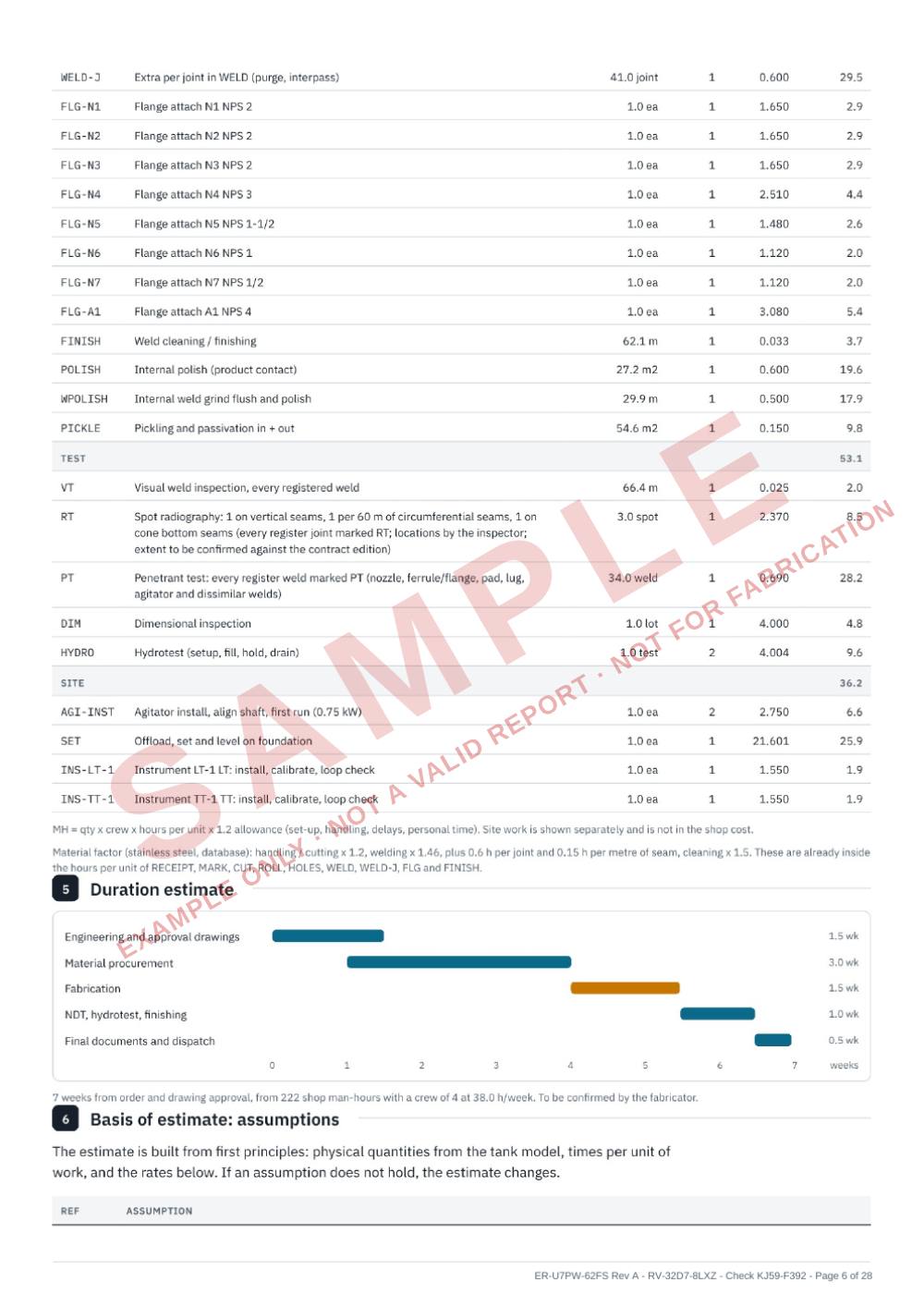
Labour is built activity by activity: cutting, rolling, fit-up, welding, NDT, hydrotest, pickling and passivation, polishing and engineering. Each line shows the quantity, the rate and the hours. A bar chart turns the hours into a duration plan, from drawing approval to dispatch.
Basis, assumptions and exclusions (pages 6 to 8)
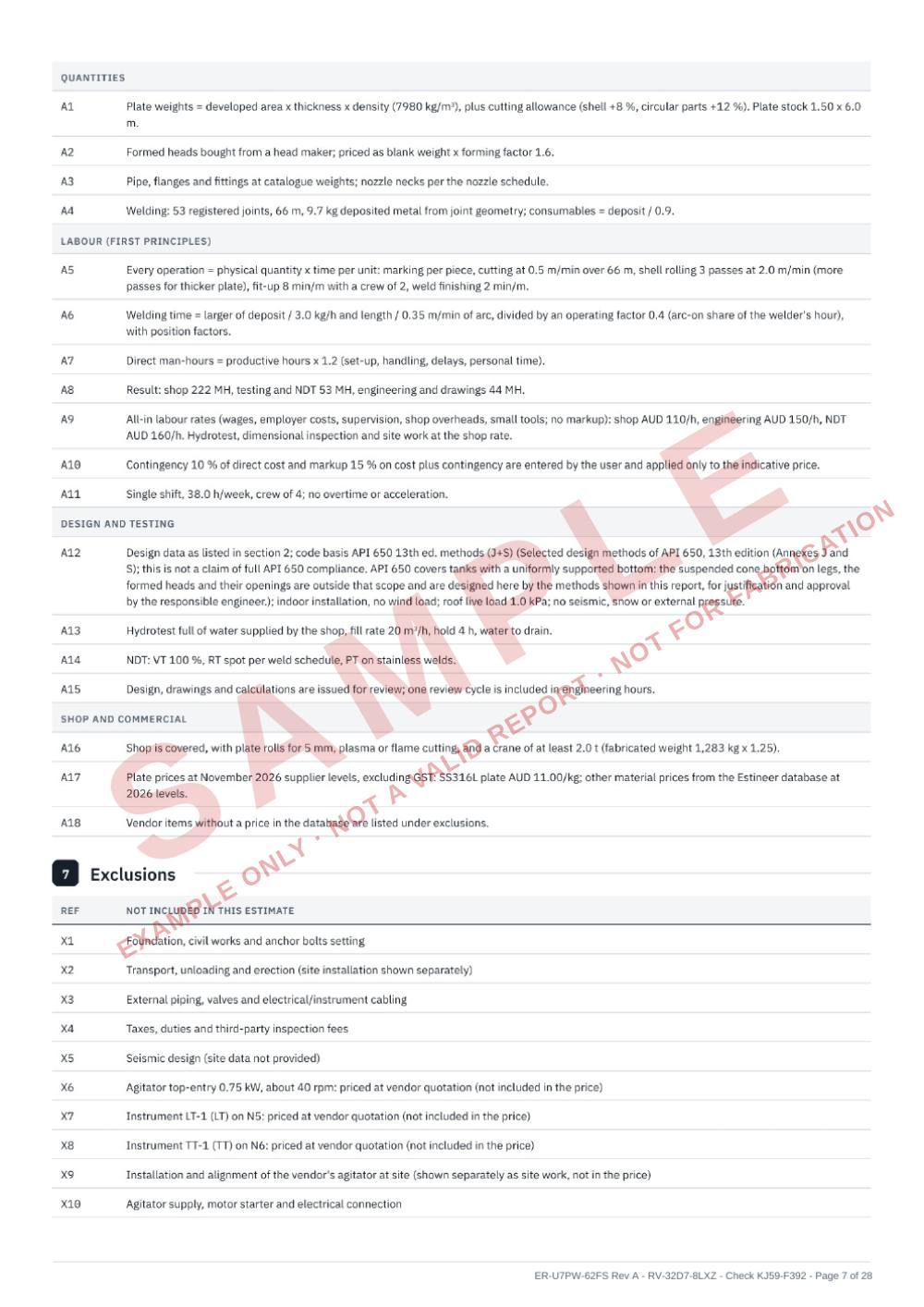
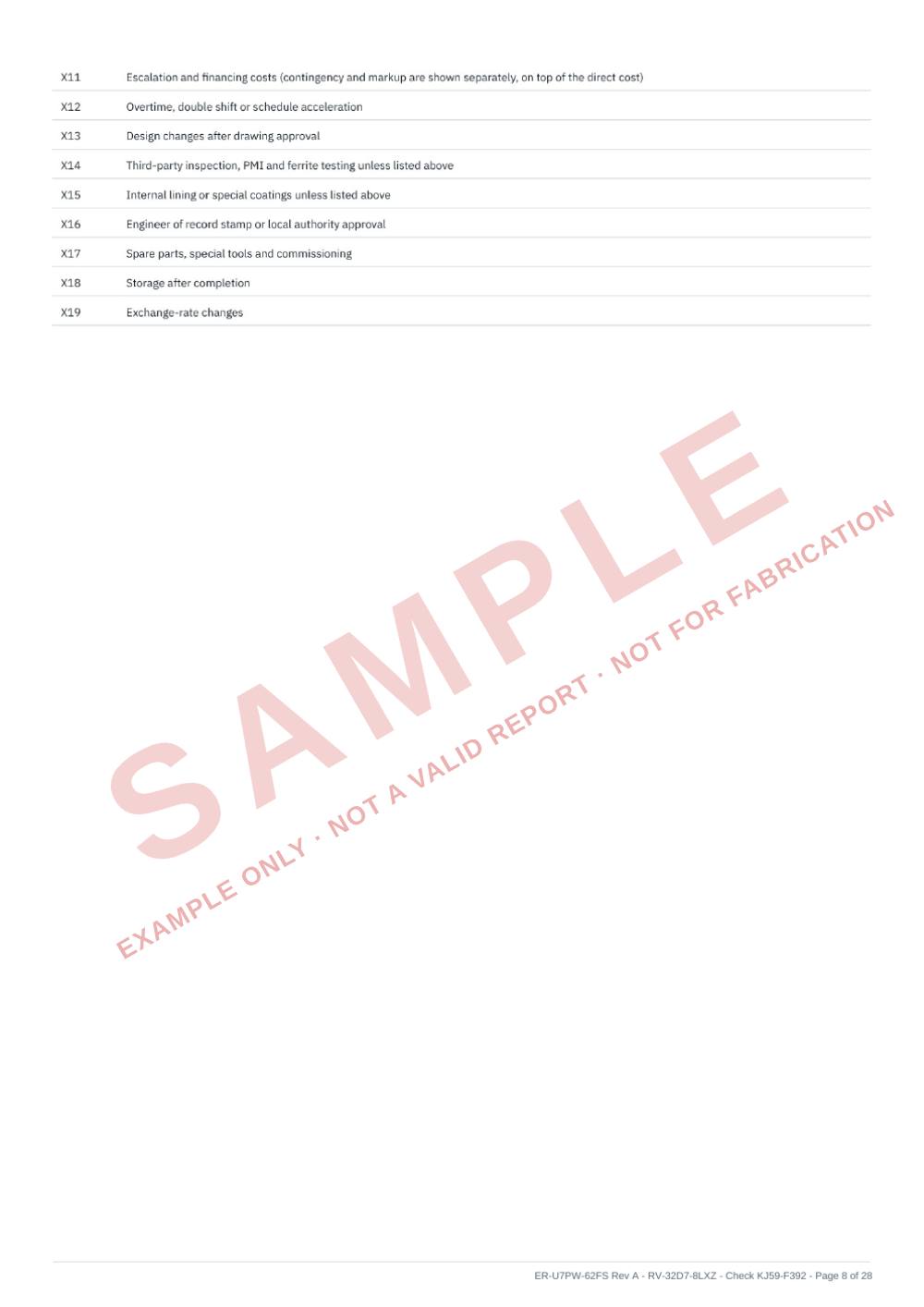
The design basis, the code and edition used, the assumptions behind each number, and a clear list of what is not in the price, such as GST, transport, site work and vendor items. See what a fabrication quote should state.
Drawings (pages 9 to 19)
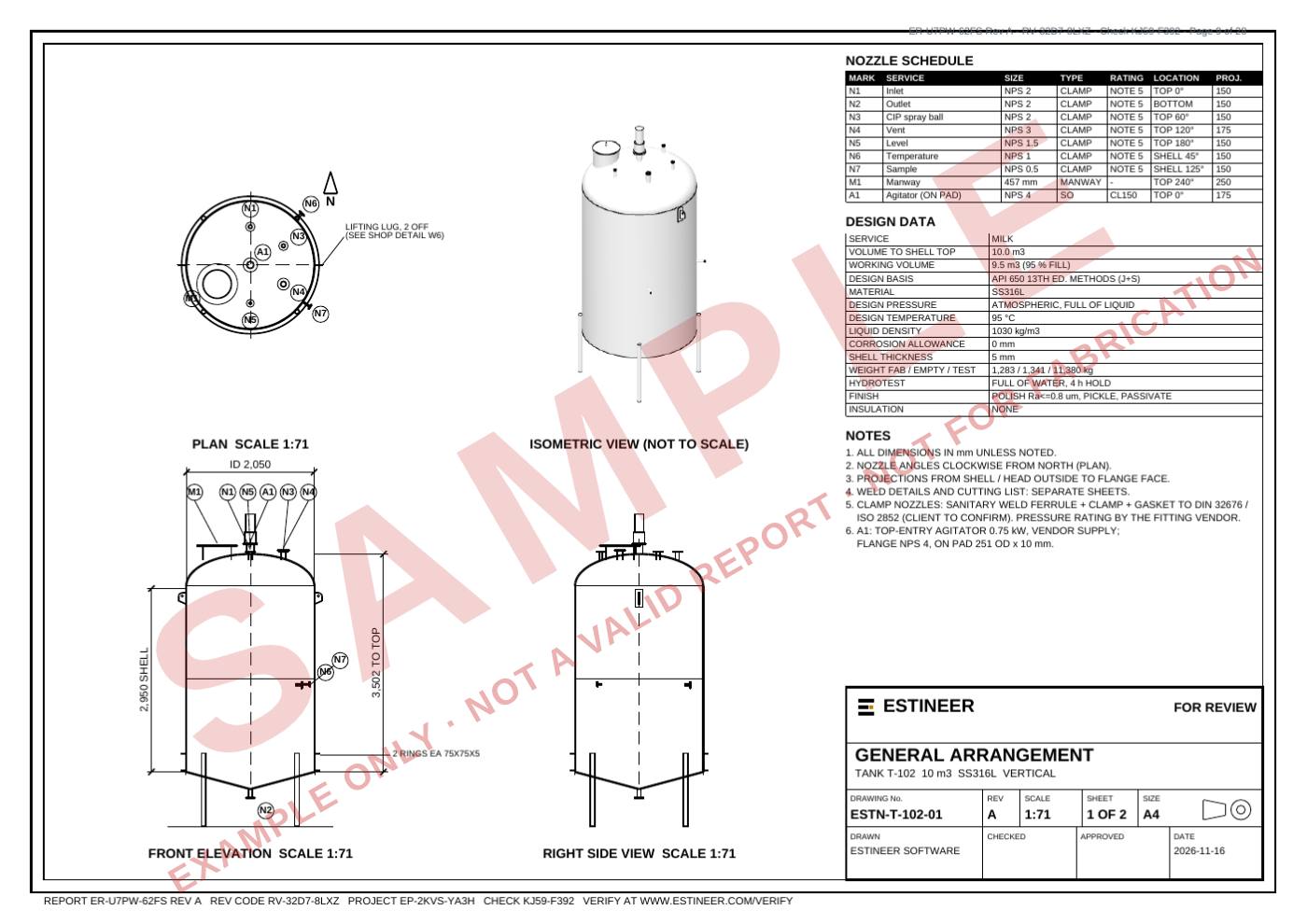
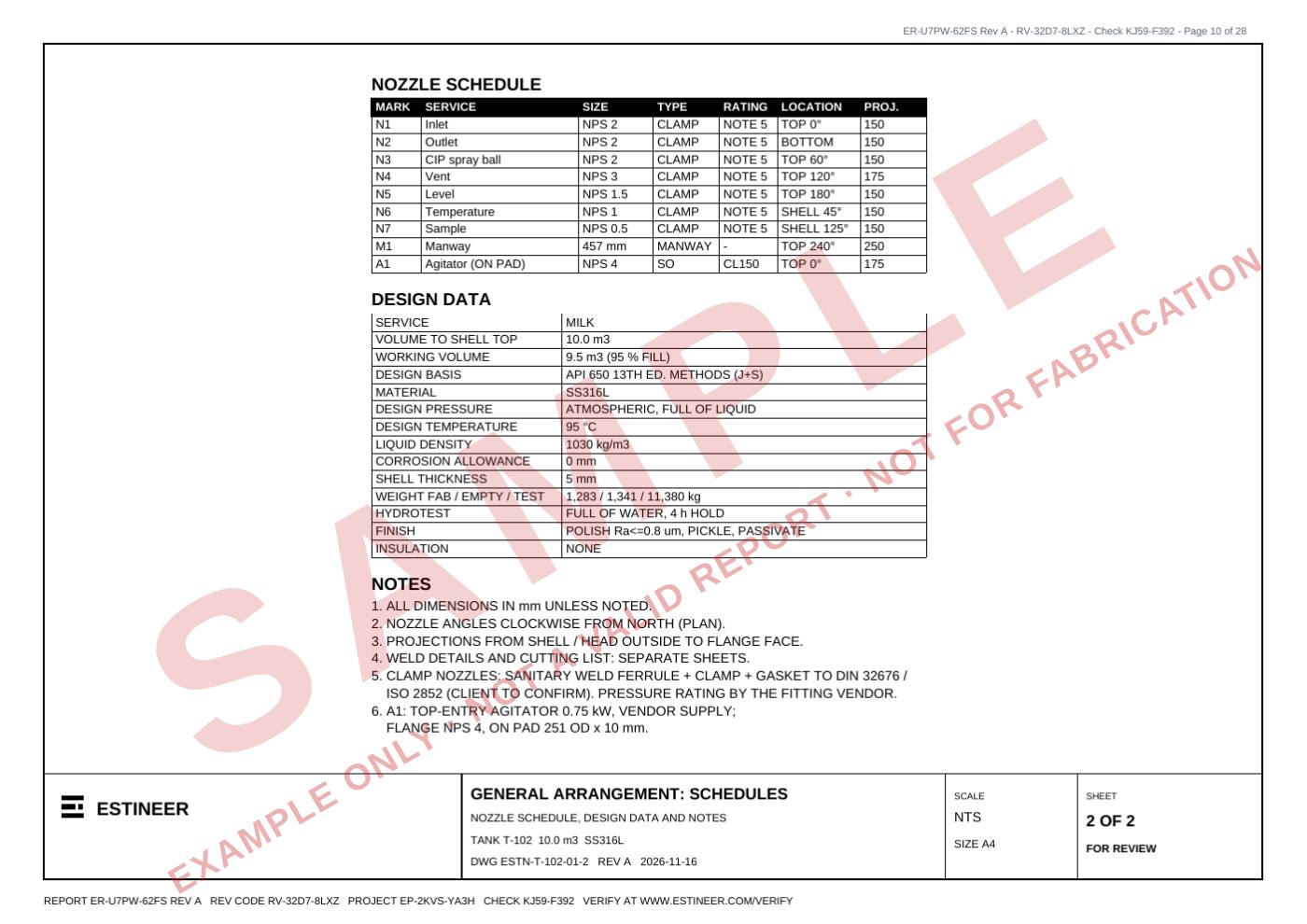
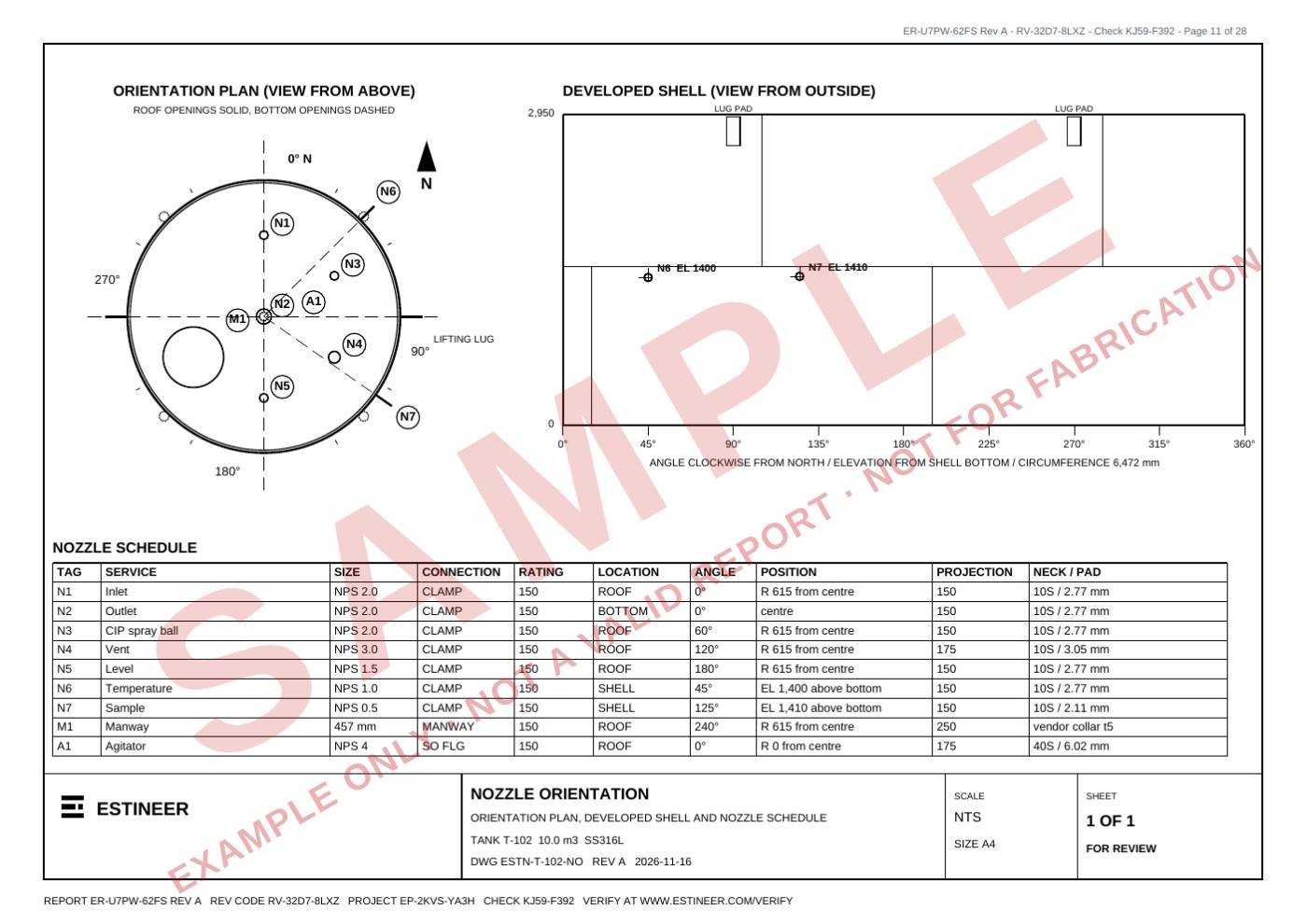
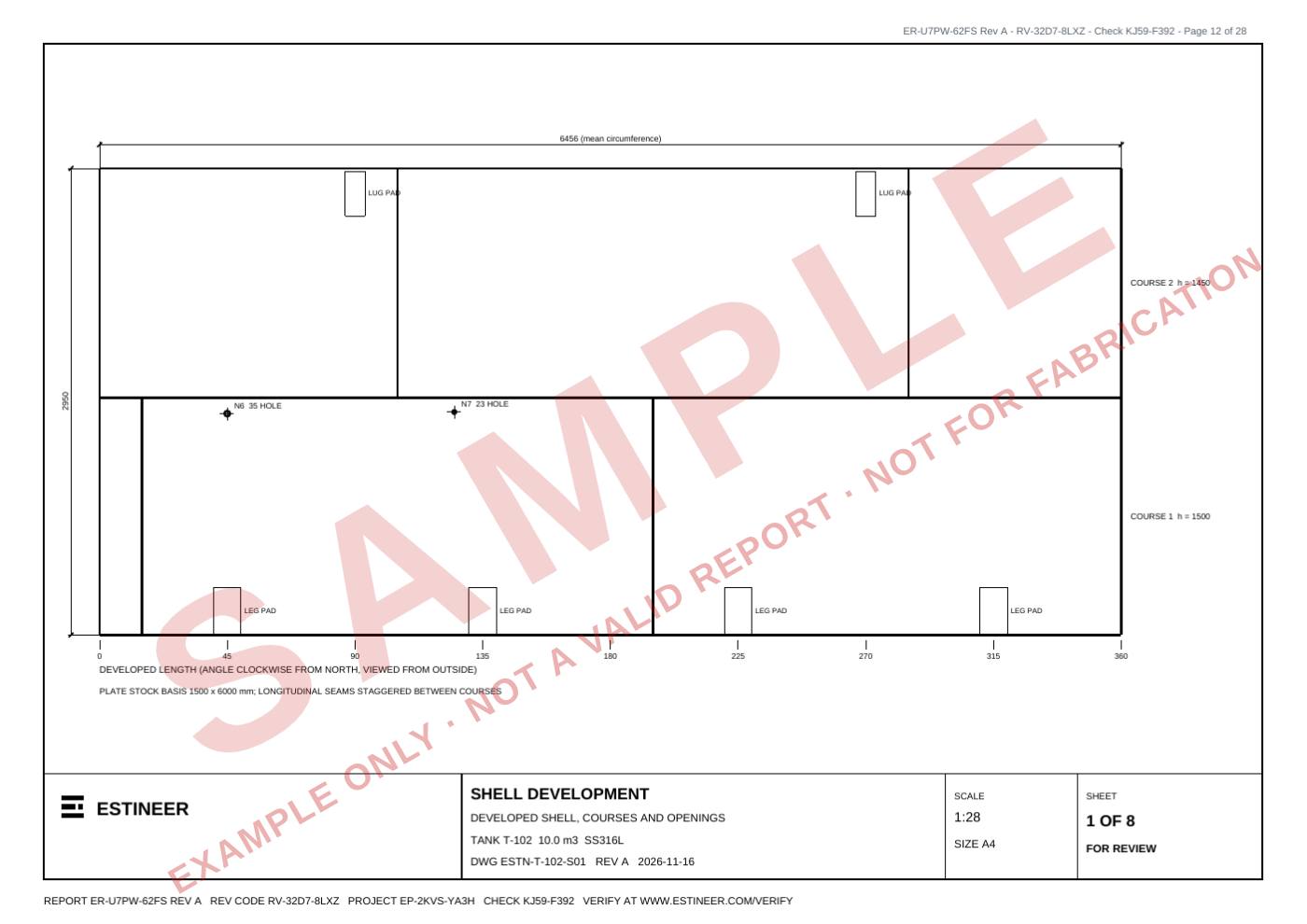
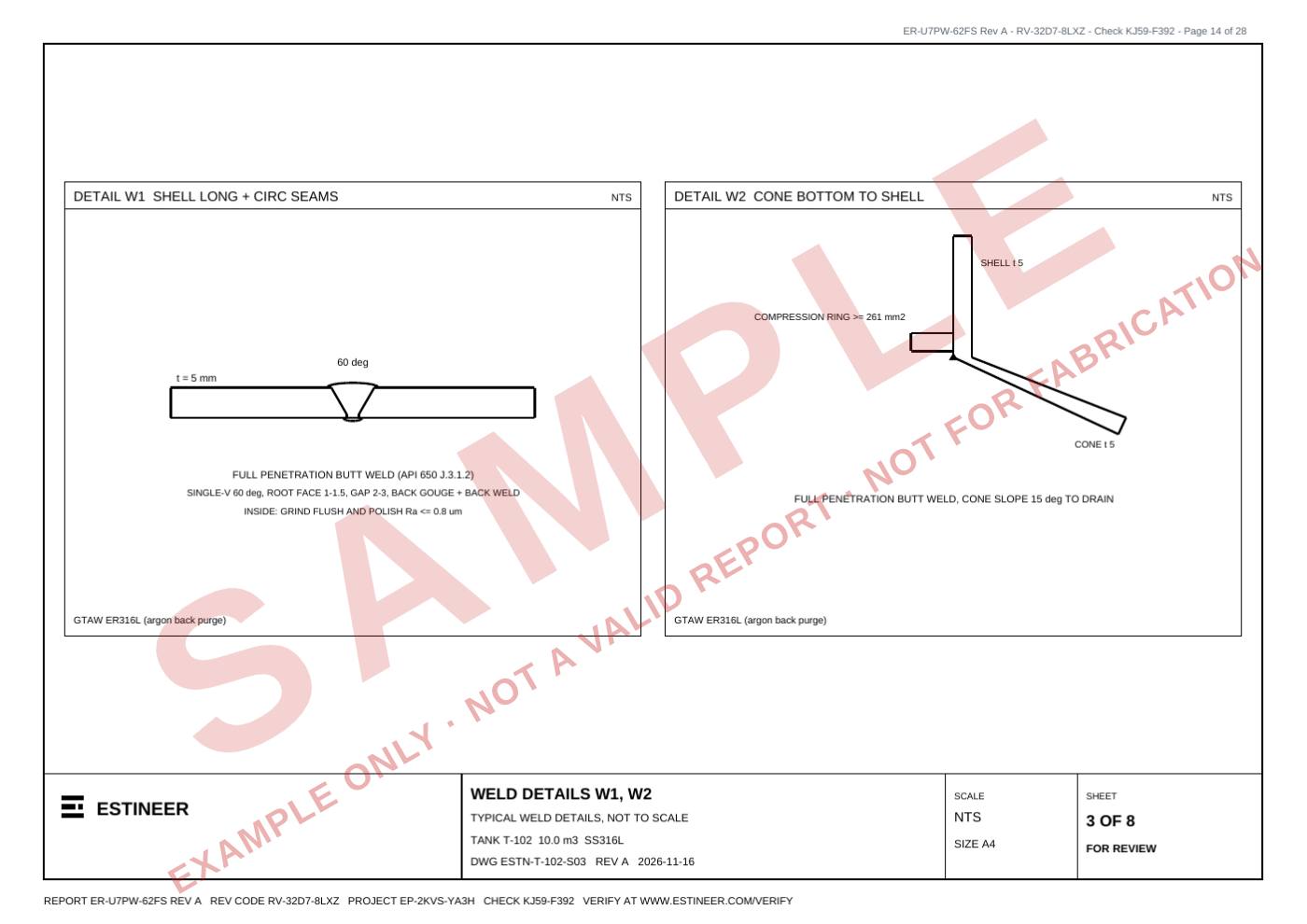
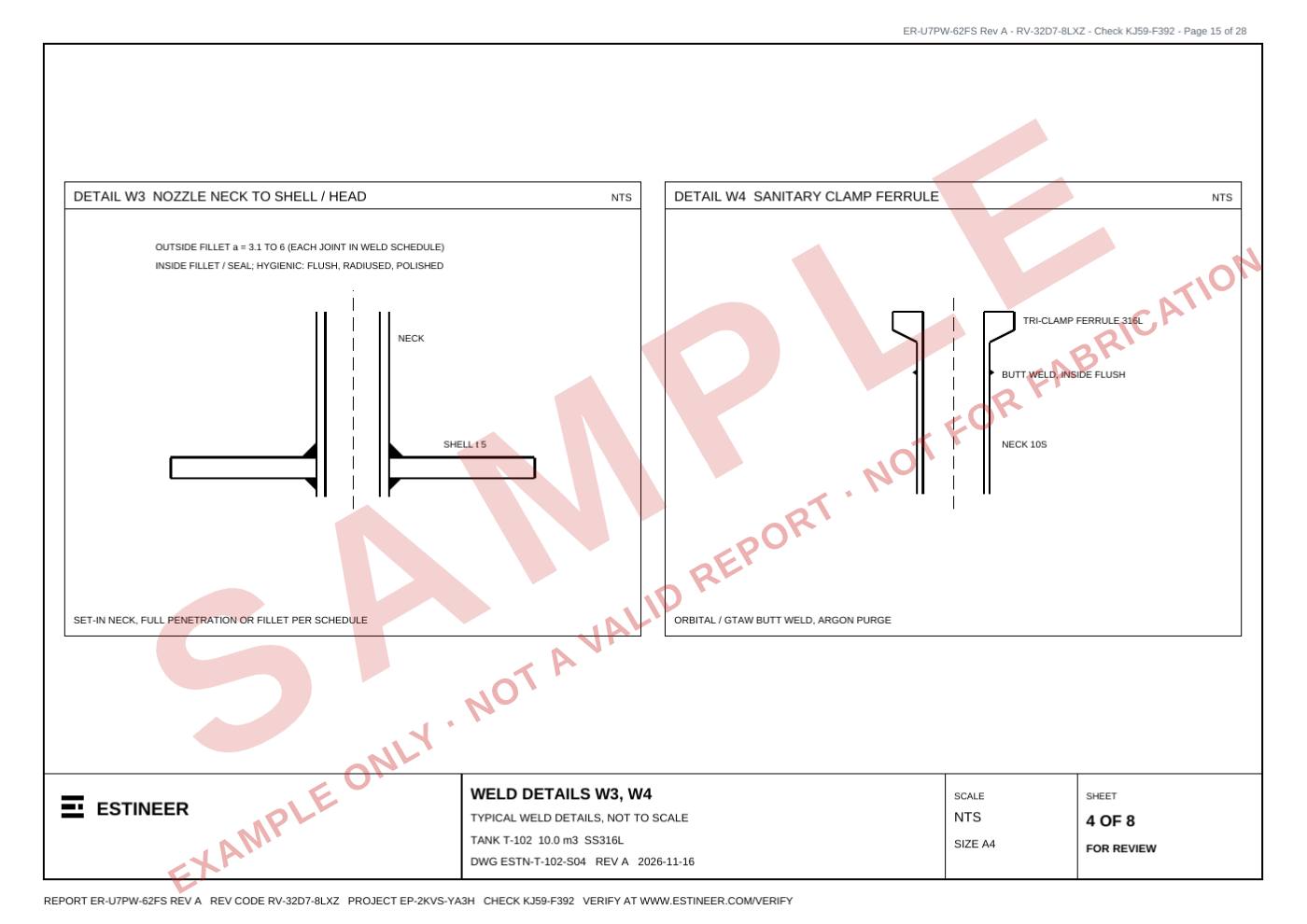
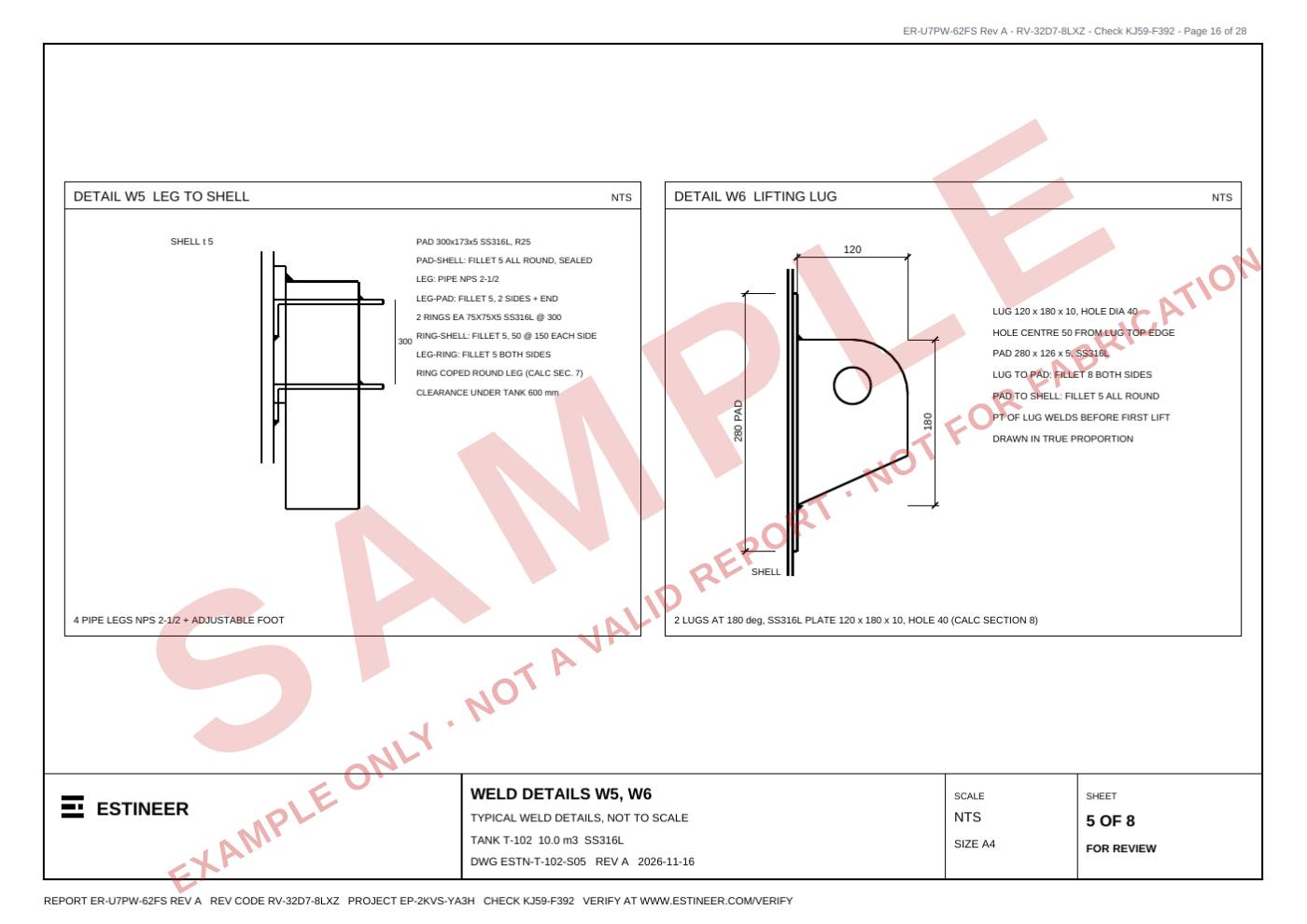
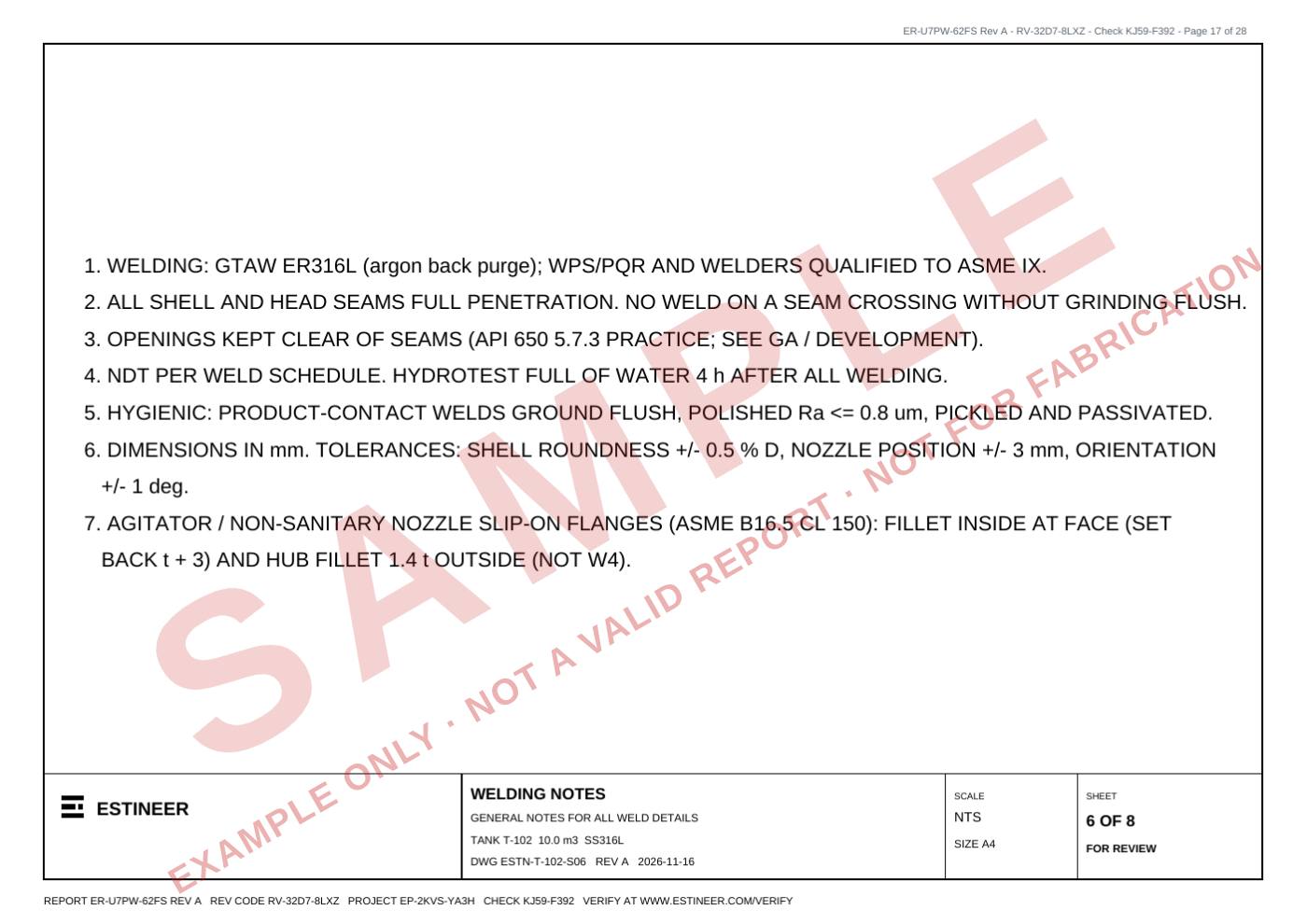
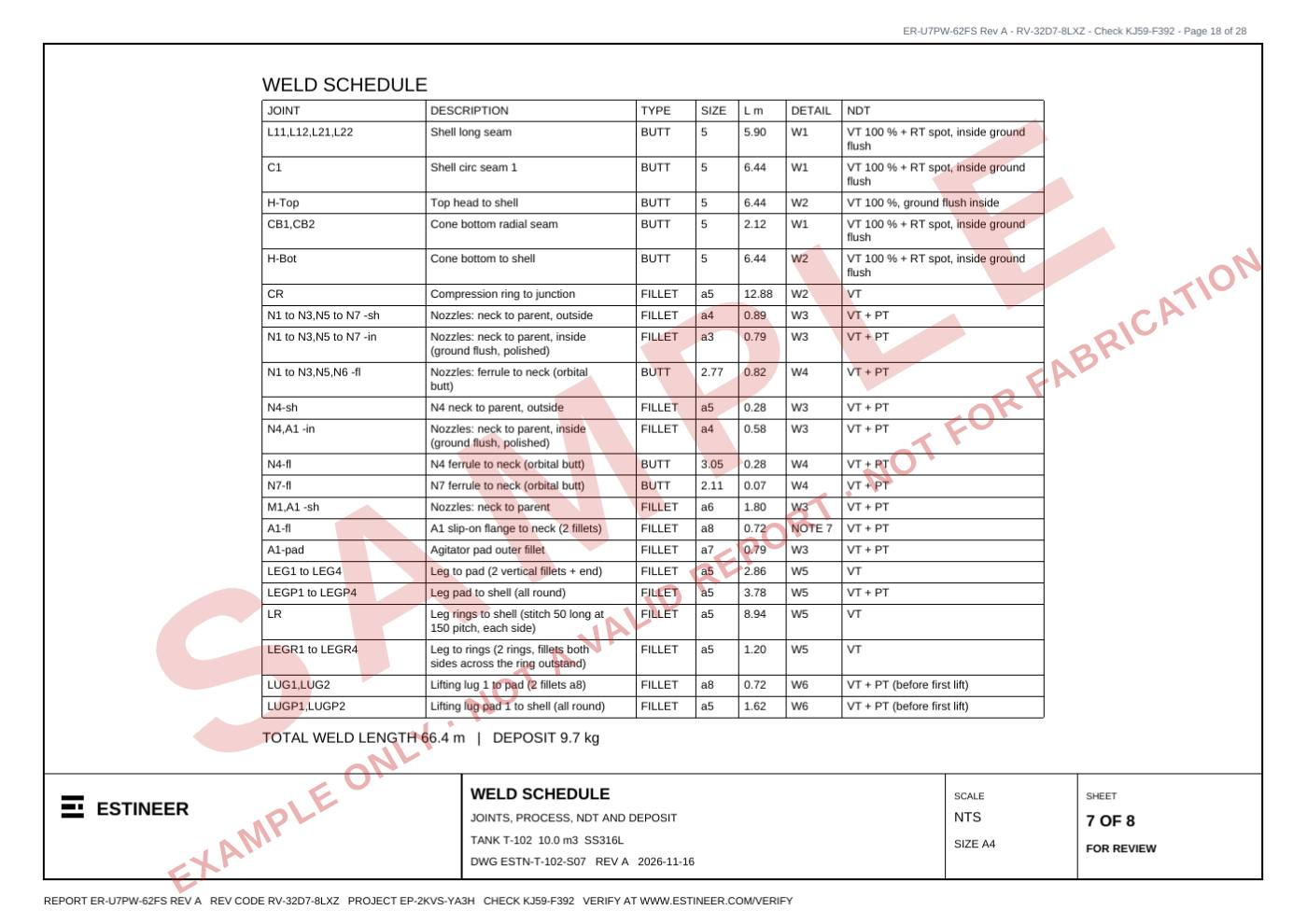
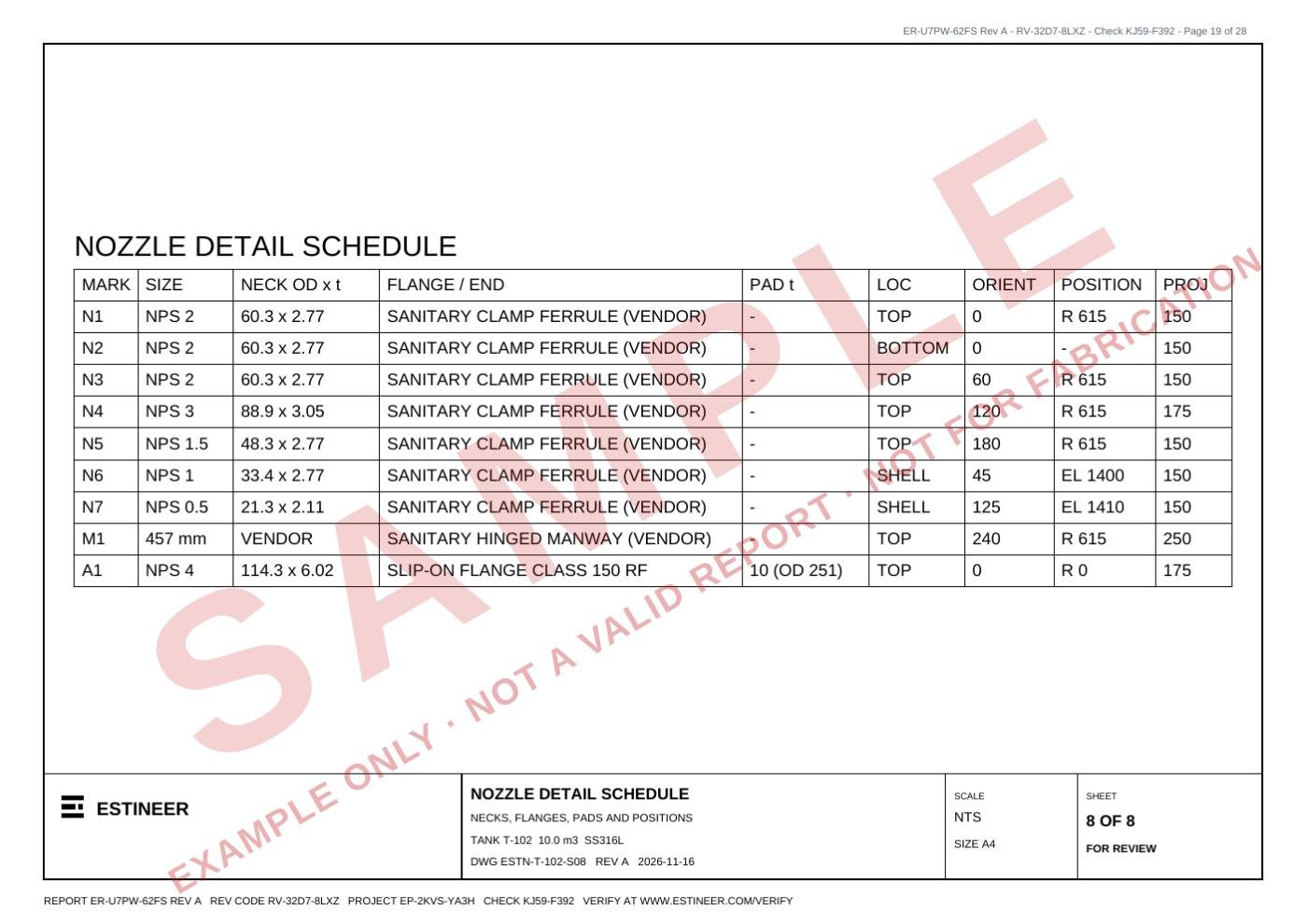
A4 drawings marked "for review": the general arrangement with nozzle schedule and design data, the nozzle orientation, the developed shell, the cutting and material list, weld details for the shell seams, nozzles, legs and lifting lugs, the welding notes, the weld schedule and the nozzle detail schedule.
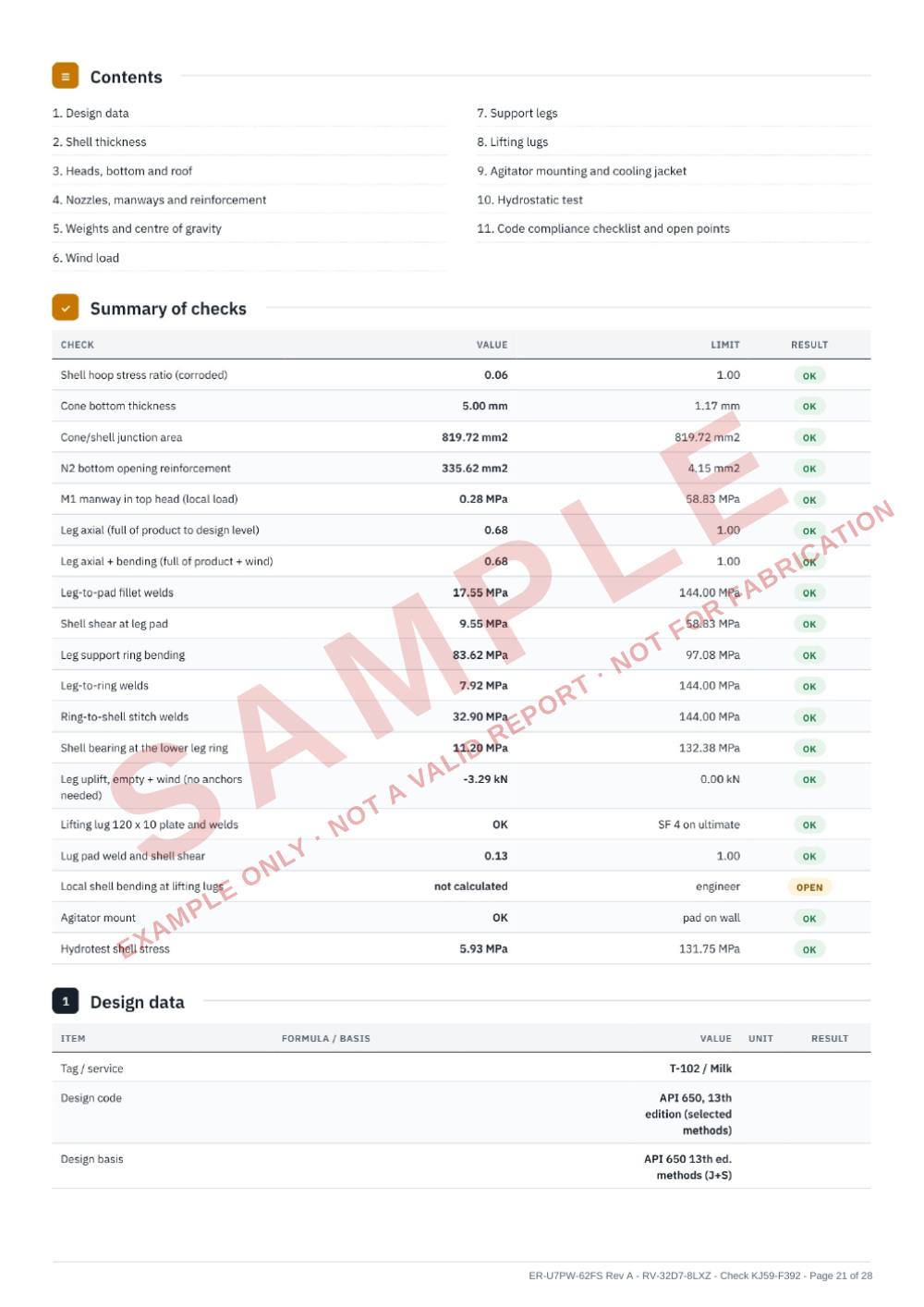
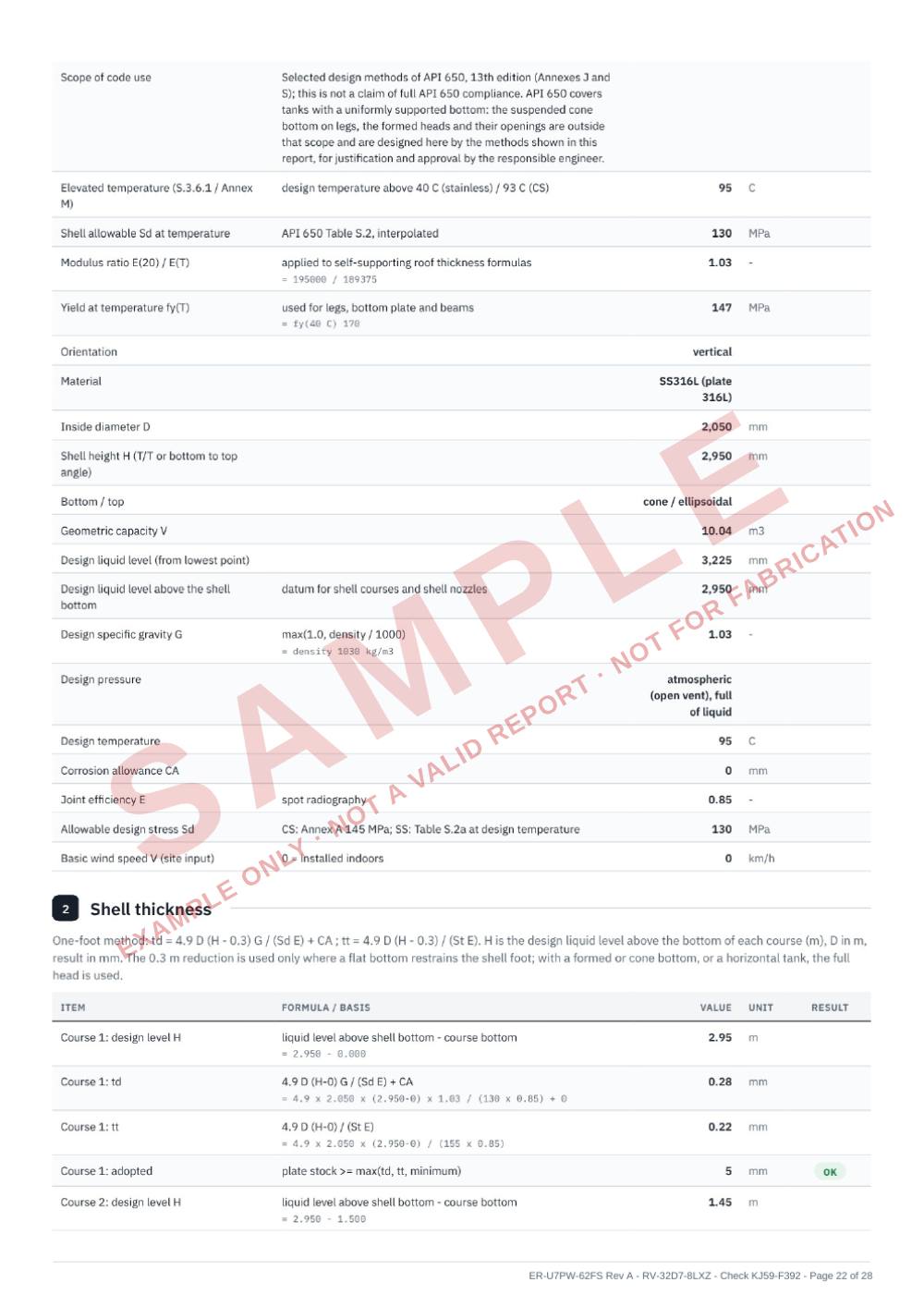
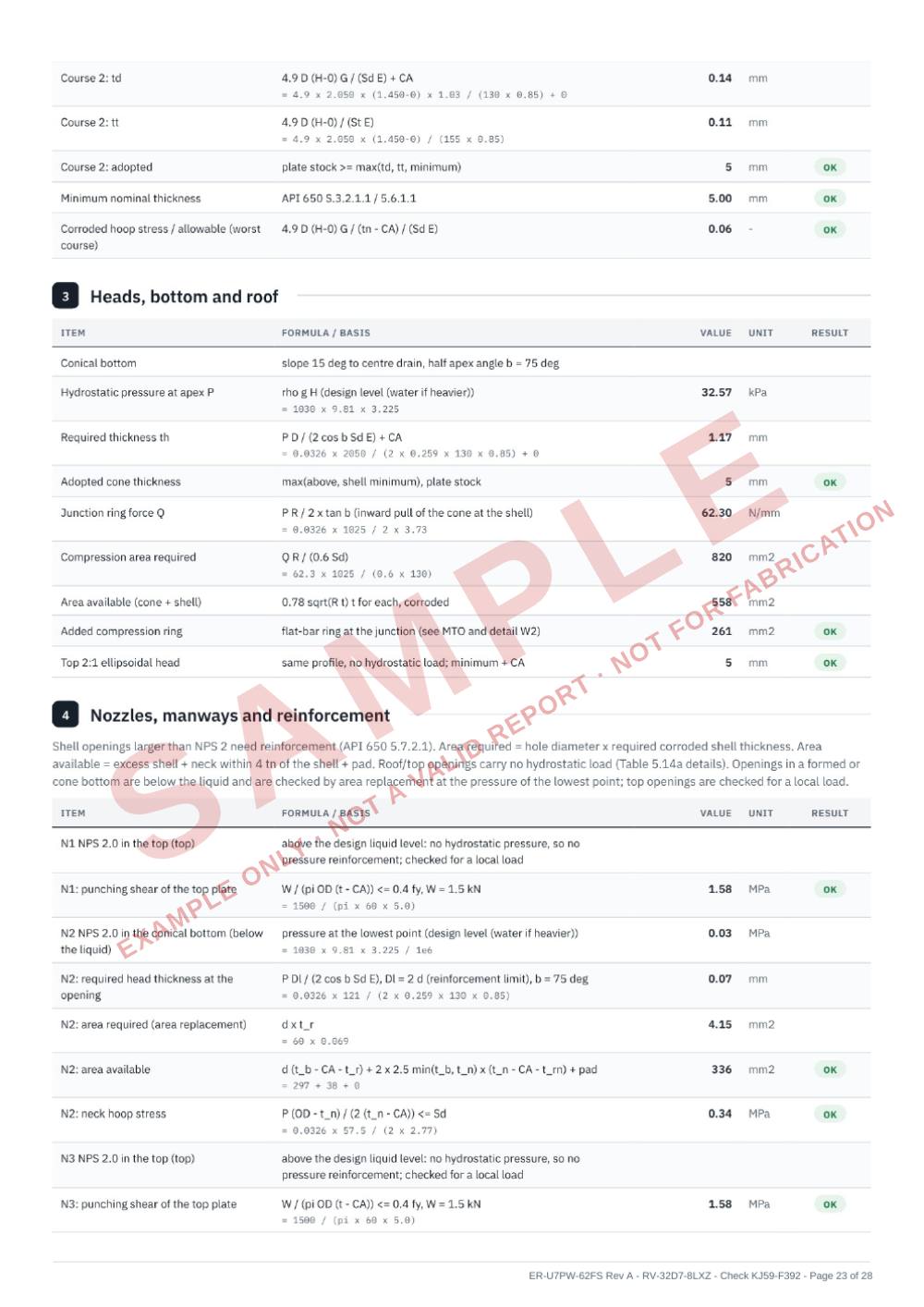
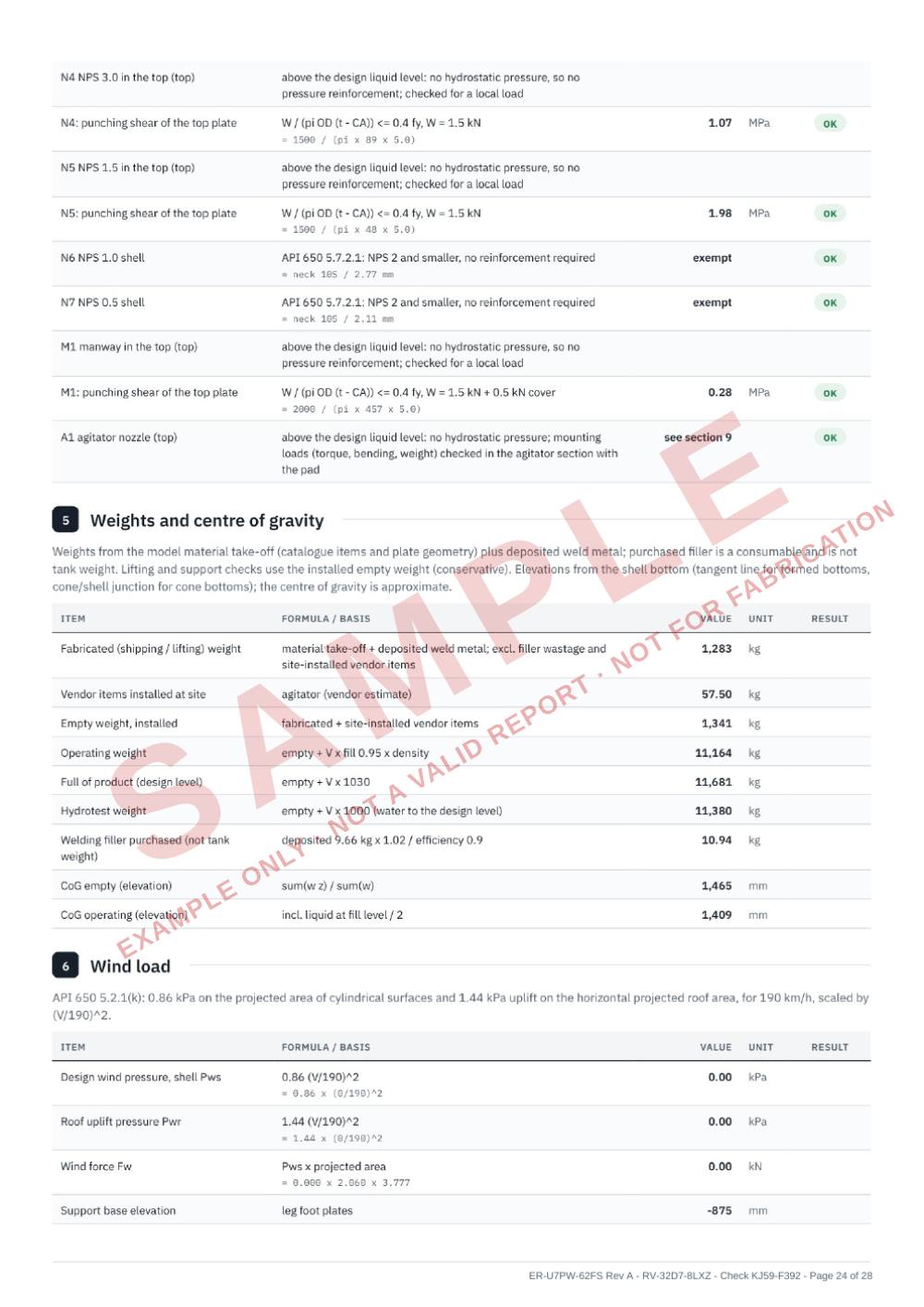
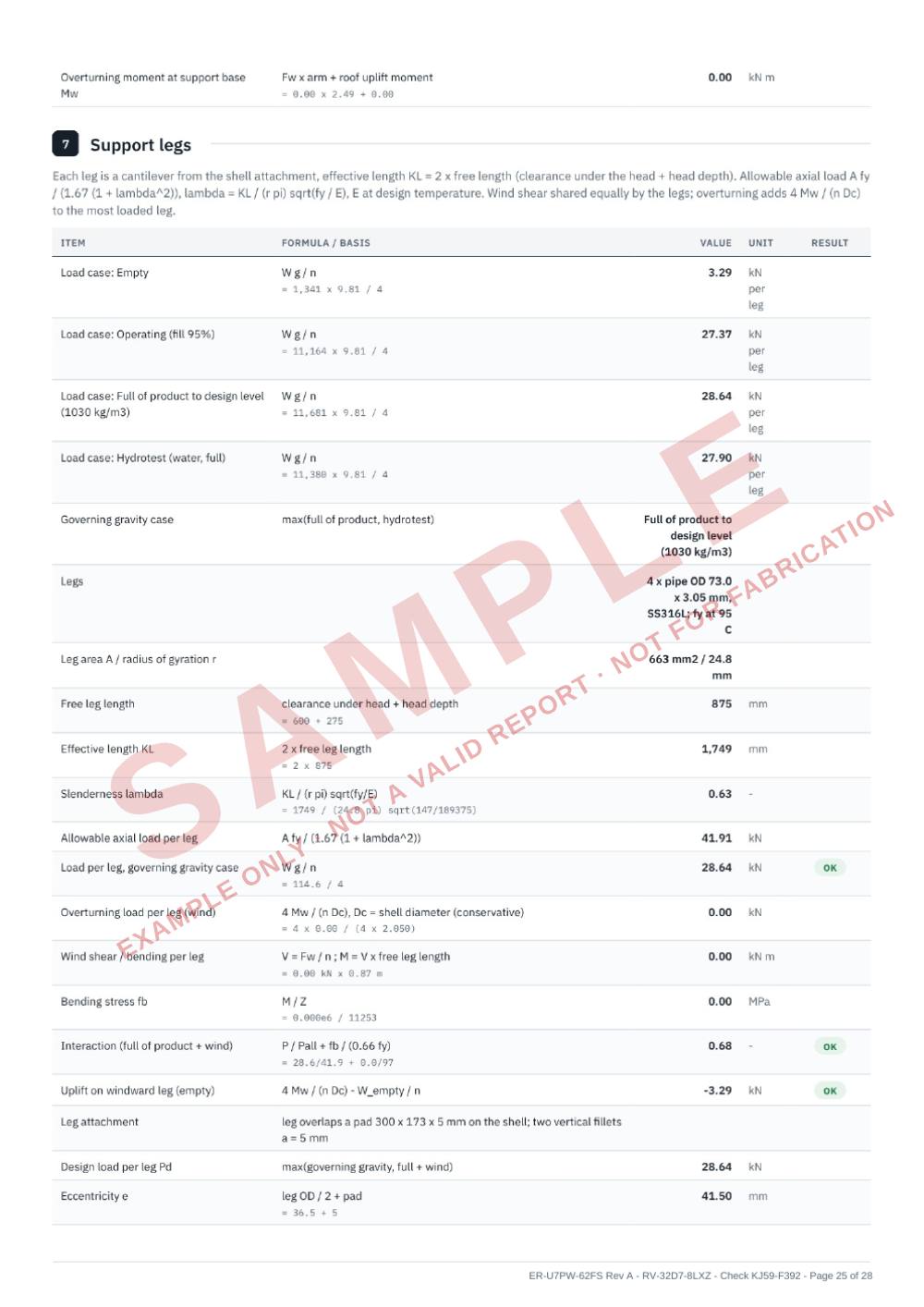
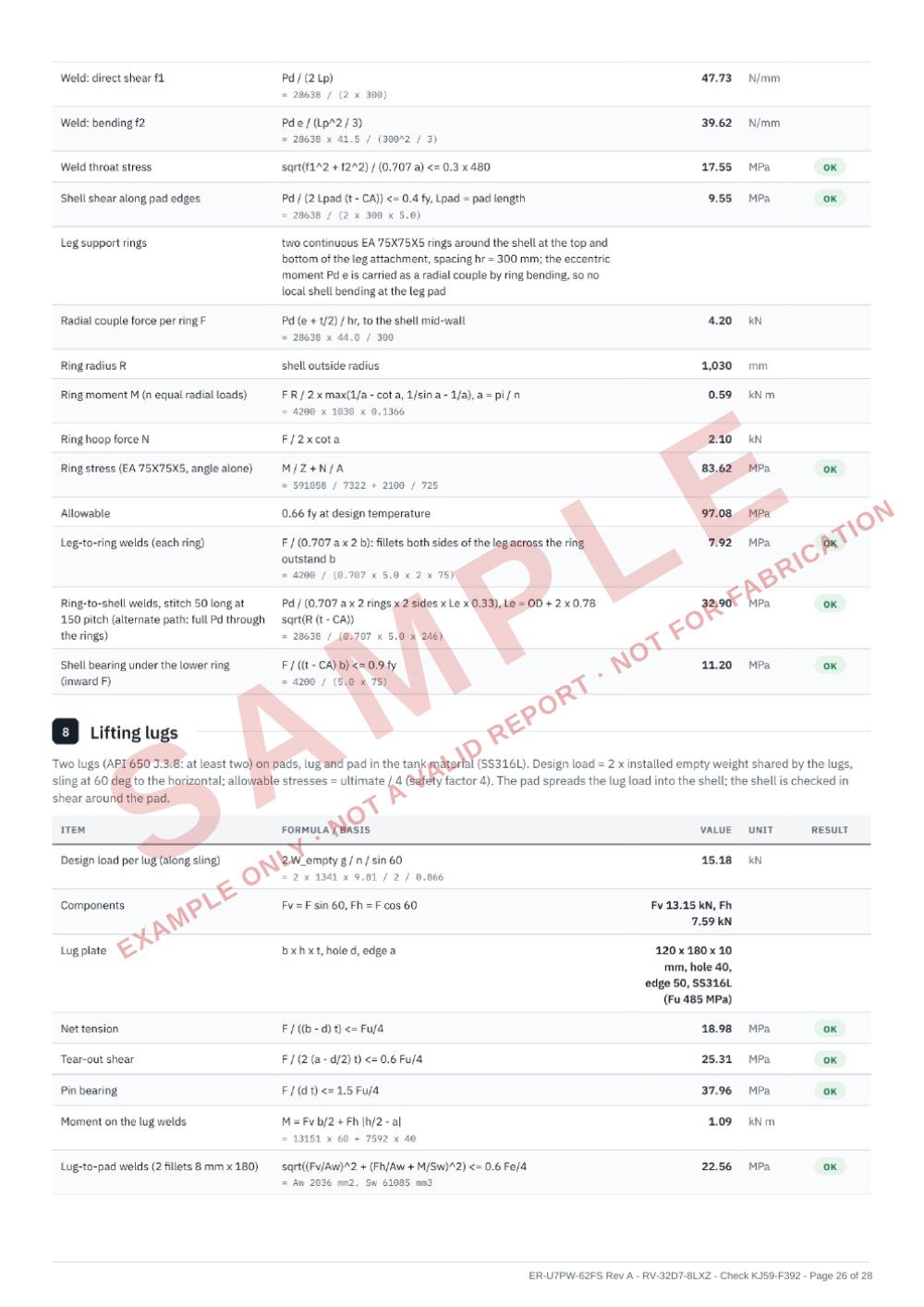
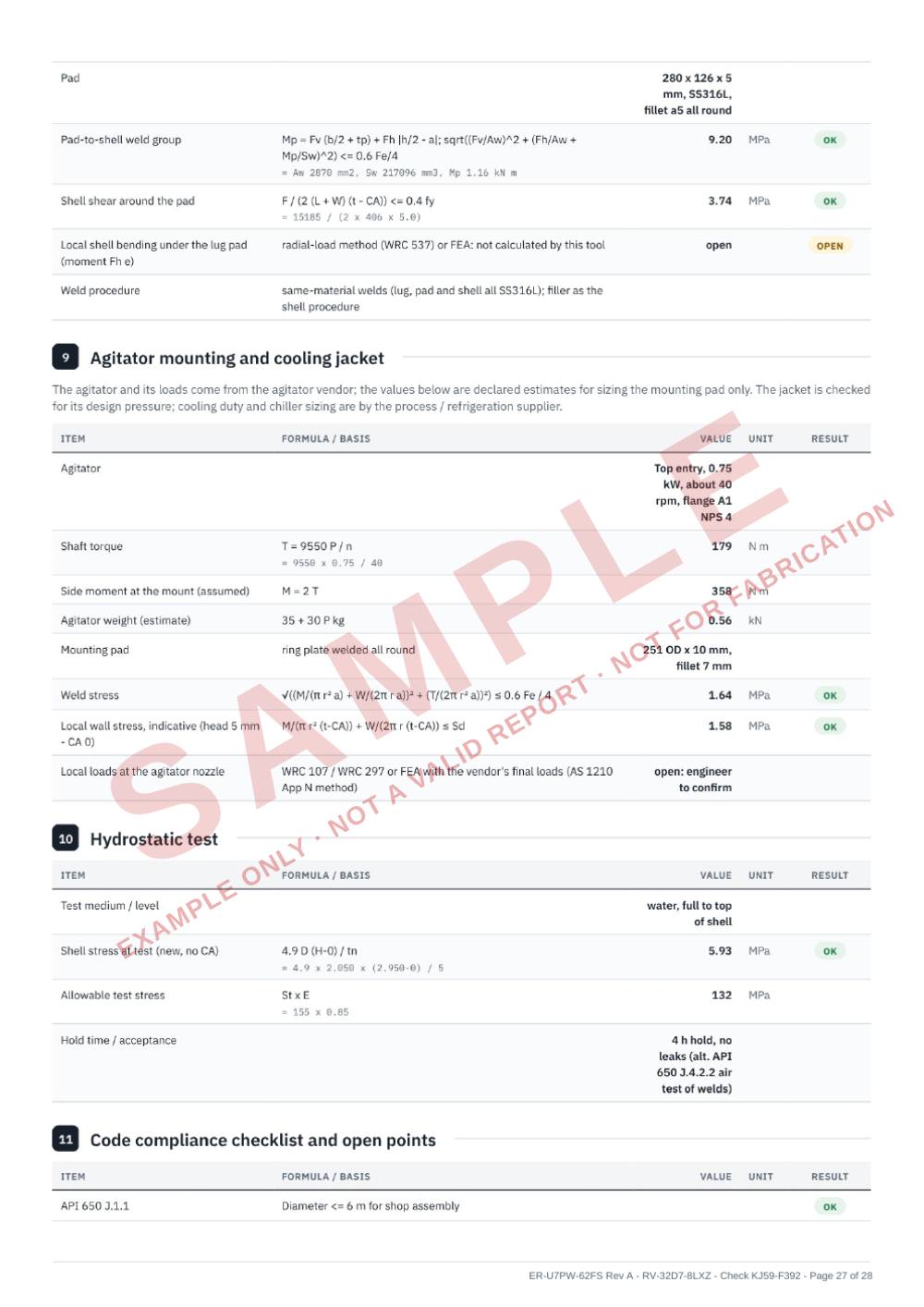
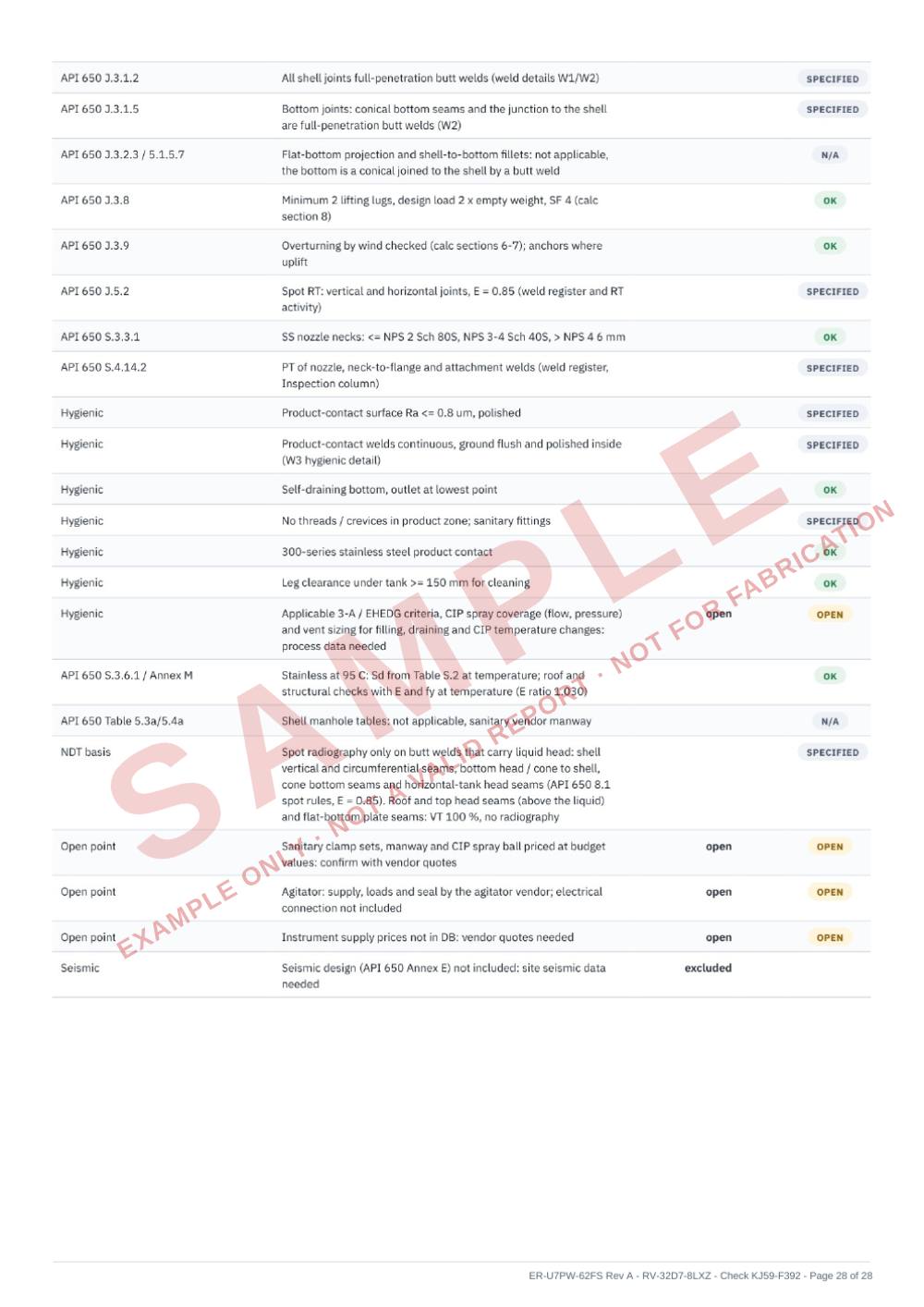
Engineering calculation (pages 20 to 28)
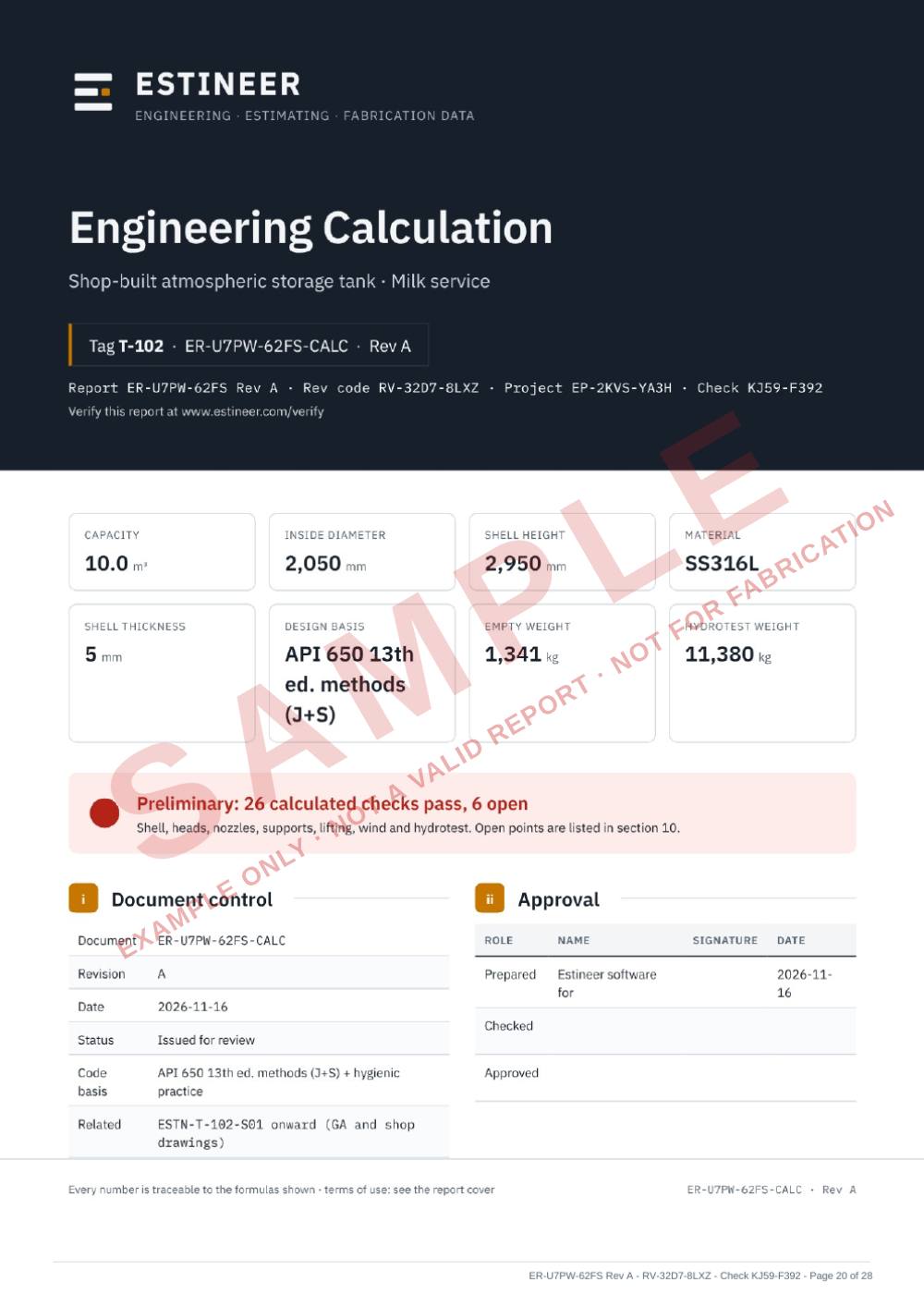
The design check behind the drawings: shell and head thickness, nozzles and openings, weights and centre of gravity, wind load, support legs, lifting lugs, the hydrostatic test and a code compliance checklist with any open points. Each check shows the formula, the inputs and the result, so an engineer can follow and verify it.
Make your own
Fill in the datasheet in the Atmospheric Storage Tanks tool. The preview is free and needs no sign-up; you pay only for the final report. Read how to estimate the cost of a shop-built storage tank to see the method step by step.